About half an hour’s drive from Brisbane lies one of the most beautiful nature reserves in the region: the Boondall Wetlands. A paradise for nature lovers, with an impressive variety of flora and fauna. Keep your eyes peeled, because there’s a good chance you’ll spot snakes, striking lizards, and beautiful birds here. In this blog we’ll take you through Boondall Wetlands and share our best practical tips.
Practical information
Address: 31 Paperbark Drive, Boondall QLD 4034
Opening hours: The nature reserve is open daily from 6:00 am to 7:00 pm.
Boondall Wetlands Environment Centre: Tuesday through Friday from 9:00 am to 4:00 pm, weekends from 9:00 am to 12:00 pm. The centre is closed on Mondays. The Boondall Wetlands Environment Centre also regularly holds free tours — keep an eye on the websites if you’re interested.
How to get there
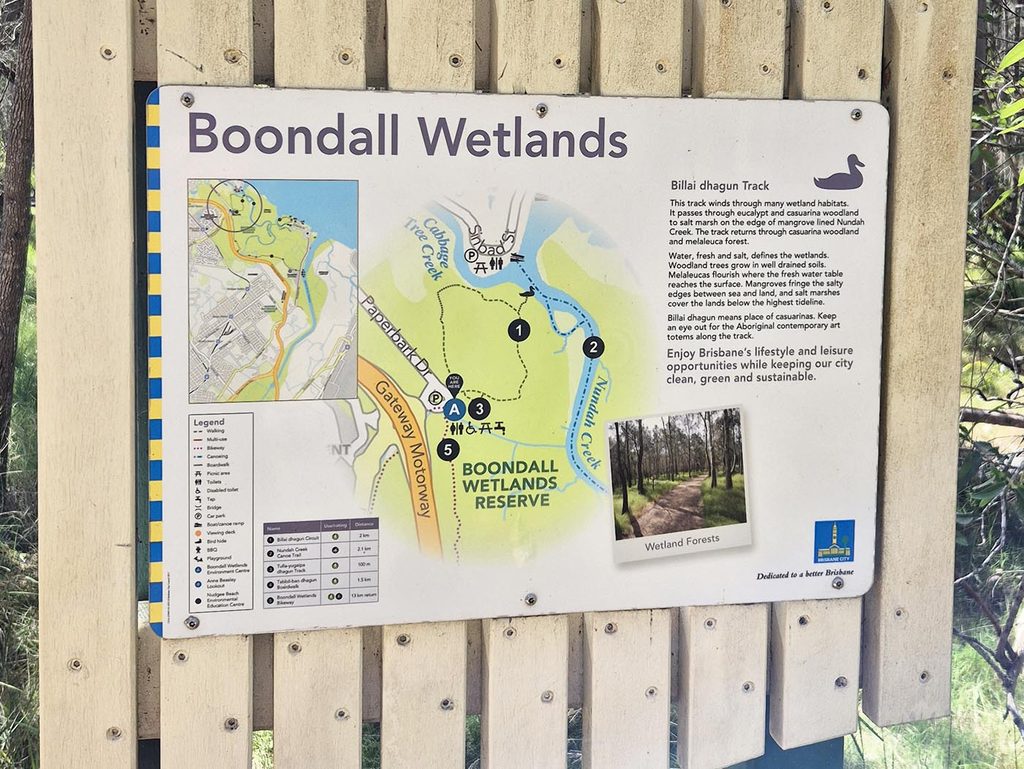
By car, drive to the Boondall Wetlands Environment Centre, where you can also park for free. The walking trails through the wetlands start from here.
Walking trails: There are three short, easy-to-walk trails ranging from 100 metres to 2 kilometres. Ideal if you only have a few hours. Download the trail map beforehand so you know where you want to go.
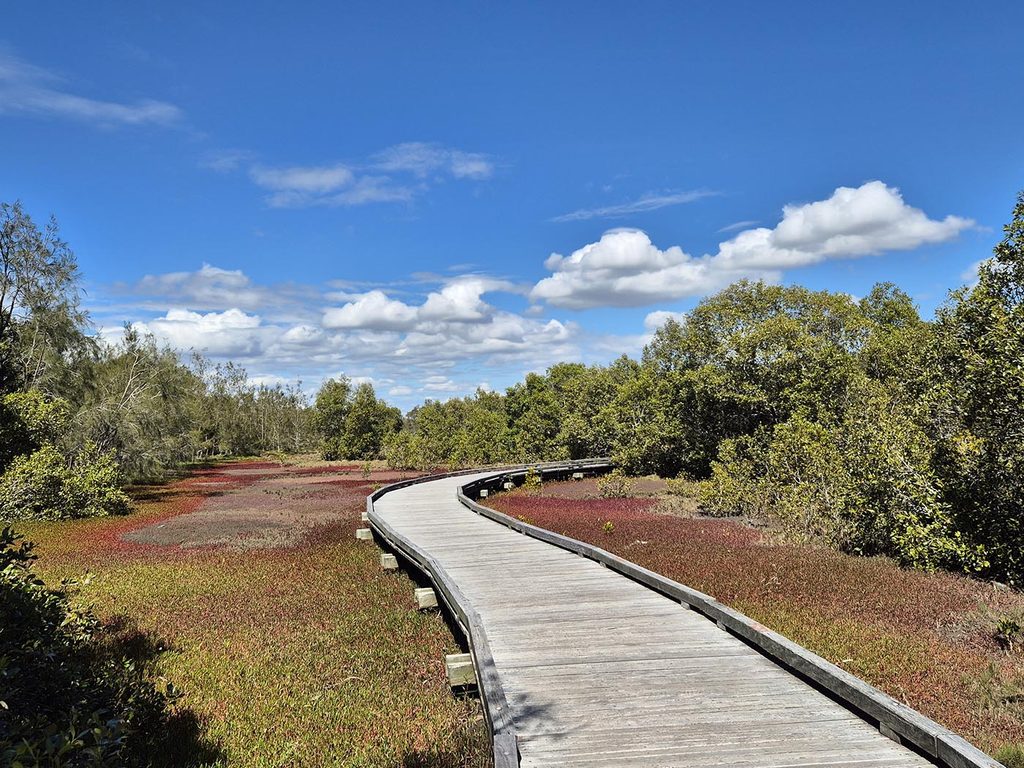
Canoeing and kayaking: Feeling more adventurous? On the Nundah Creek Canoe Trail you can paddle past mangroves and marshland. Don’t forget a life vest, sunscreen, and enough water, and check the tides beforehand.
With your dog: Boondall Wetlands is dog-friendly, provided they’re on a leash.
About the Boondall Wetlands
At 1,100 hectares, Boondall Wetlands is one of the largest untouched wetland areas within Brisbane’s city limits. The area consists of a mix of mangrove forests, marshes, grassland, and eucalyptus forest, which explains why so many different animal species live here. Wetlands in general are incredibly important for nature: they act as a kind of sponge that absorbs excess rainwater and thereby helps prevent flooding. They also purify water naturally and provide a crucial habitat for countless birds, fish, and other animals, especially during migration seasons. It’s not for nothing that wetlands are also known as the “kidneys of the earth.”
Snakes
We’ve now been to Boondall Wetlands twice, and both times we spotted snakes. The first time, we came face to face with a Red-bellied Black Snake and a large python. The second time, we saw the Red-bellied Black Snake even closer up, from about 1.5 metres away. Keep your eyes open during your walk through Boondall Wetlands, because they really are out there. You often walk right past them without noticing. So slow your pace and pause every now and then. You’ll see more than you expect.
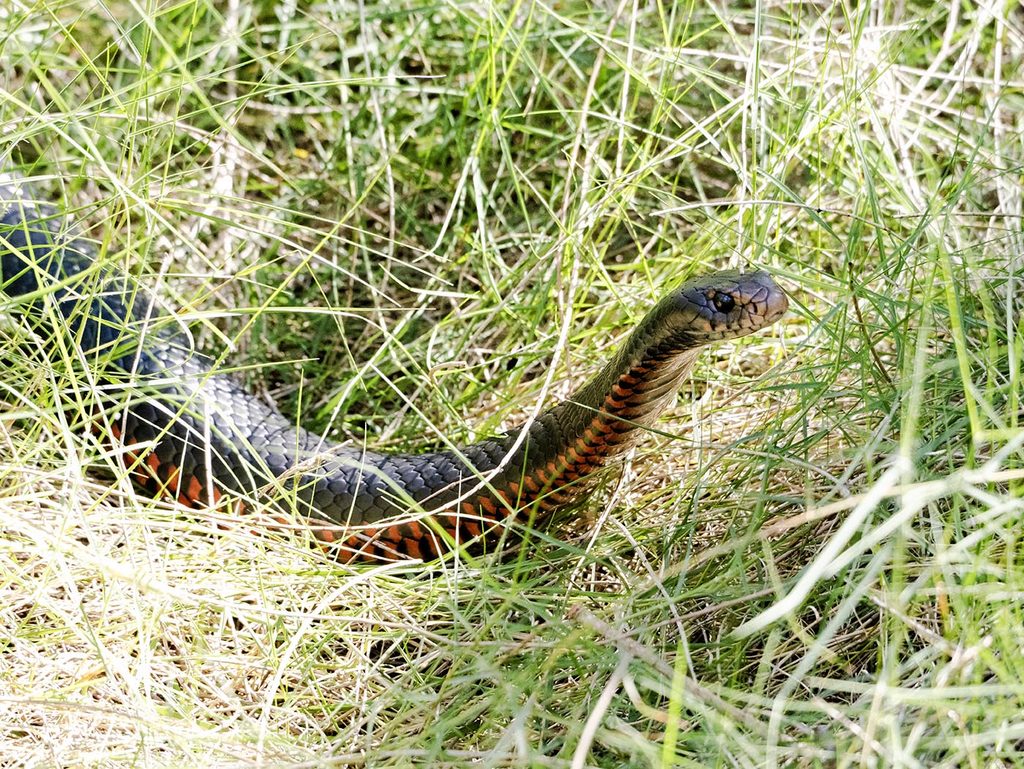
Info: The Red-bellied Black Snake is one of Australia’s most recognisable snakes, with its glossy black body and striking red-to-pink belly. You’ll often find it near bodies of water, marshes, and wetlands, such as Boondall Wetlands. Despite its venomous bite, this snake is generally shy and rarely bites without warning. Always keep your distance, stay calm, and enjoy it from afar.
Bird spotting
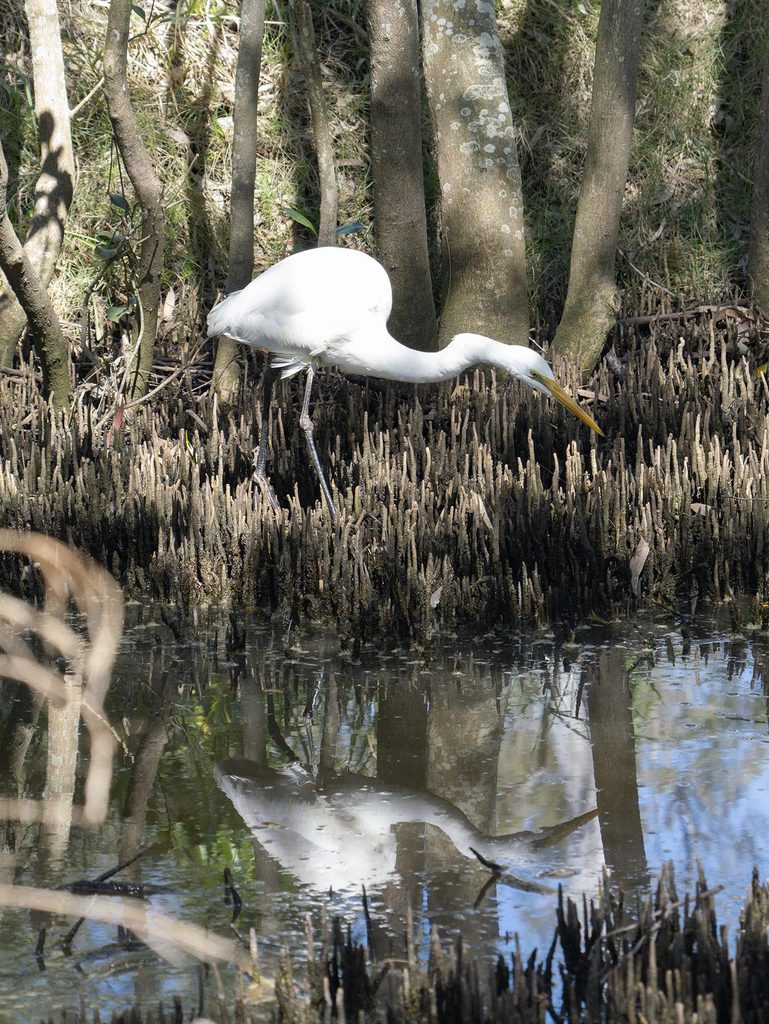
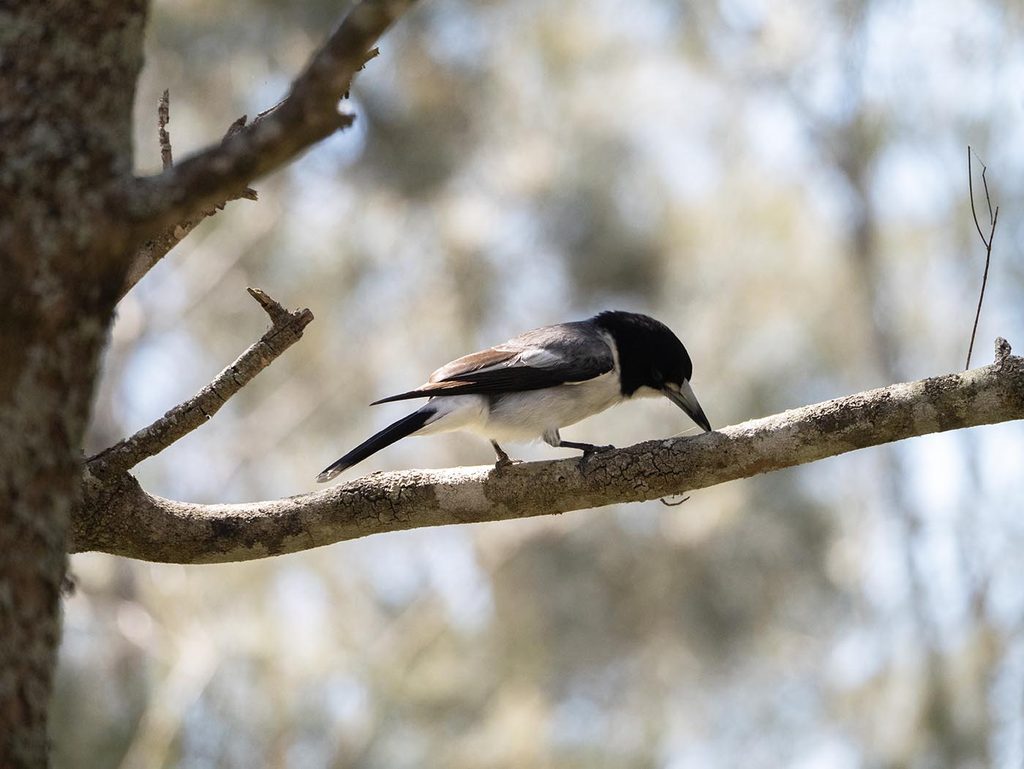
This is also an ideal spot for birdwatchers to wander around. With a pair of binoculars or a camera with a big lens, you can easily spot and photograph various bird species here. We saw a beautiful egret intently scanning the water, its reflection clearly visible on the water’s surface. We also saw several kingfishers flying about
Other animals
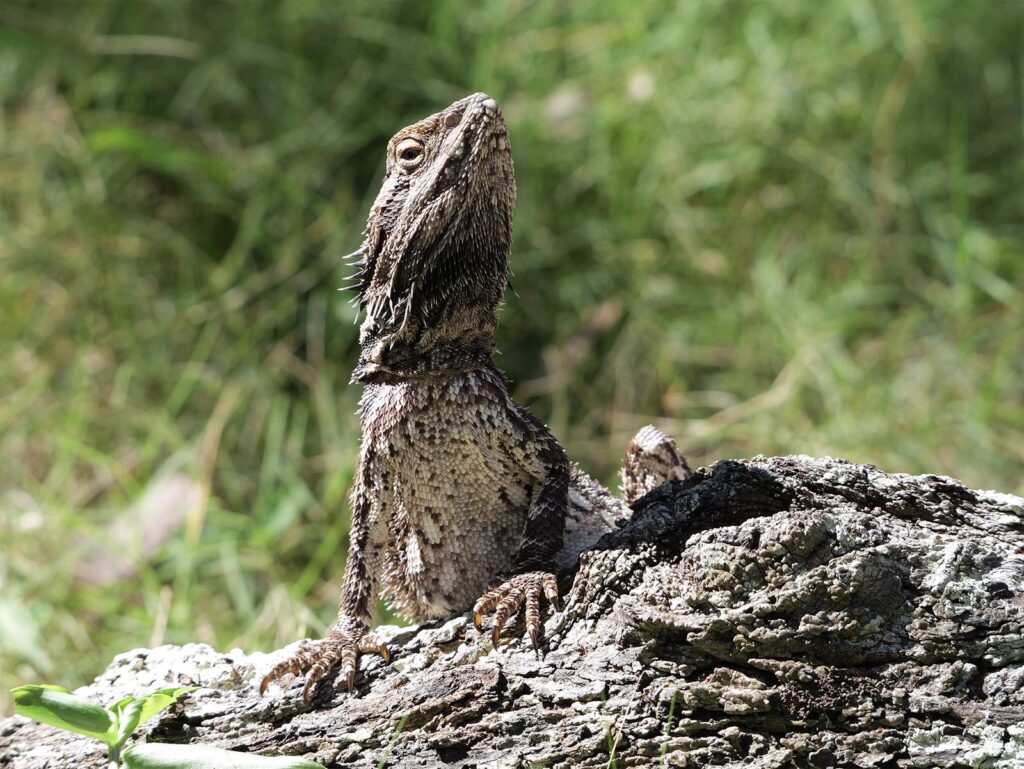
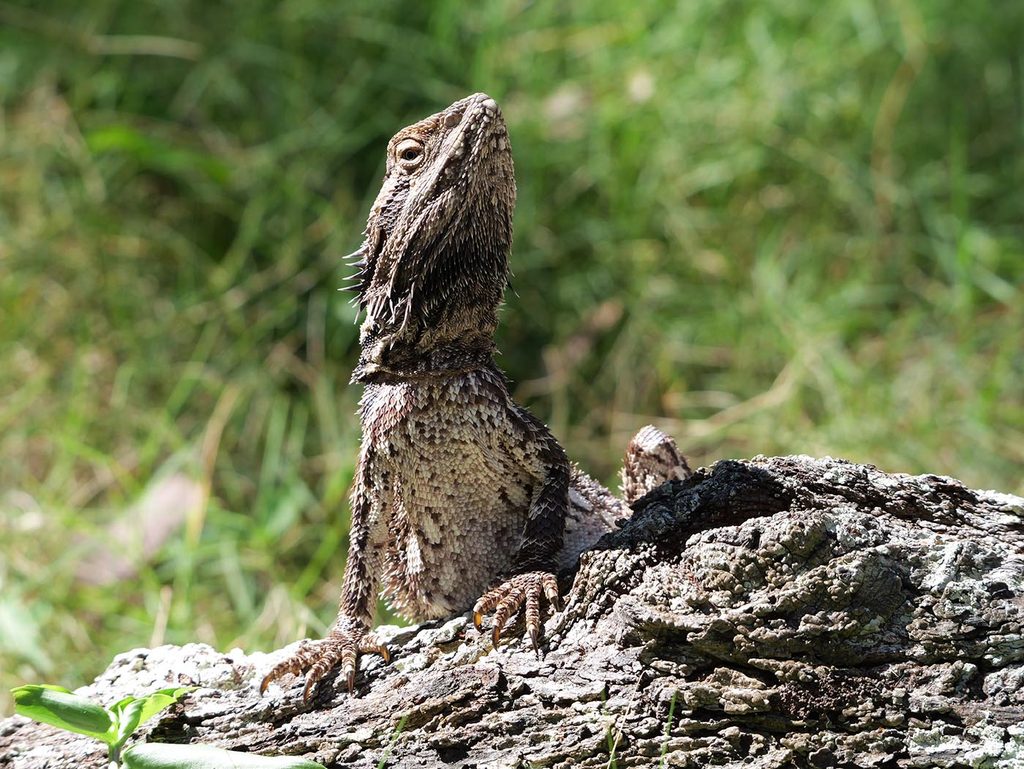
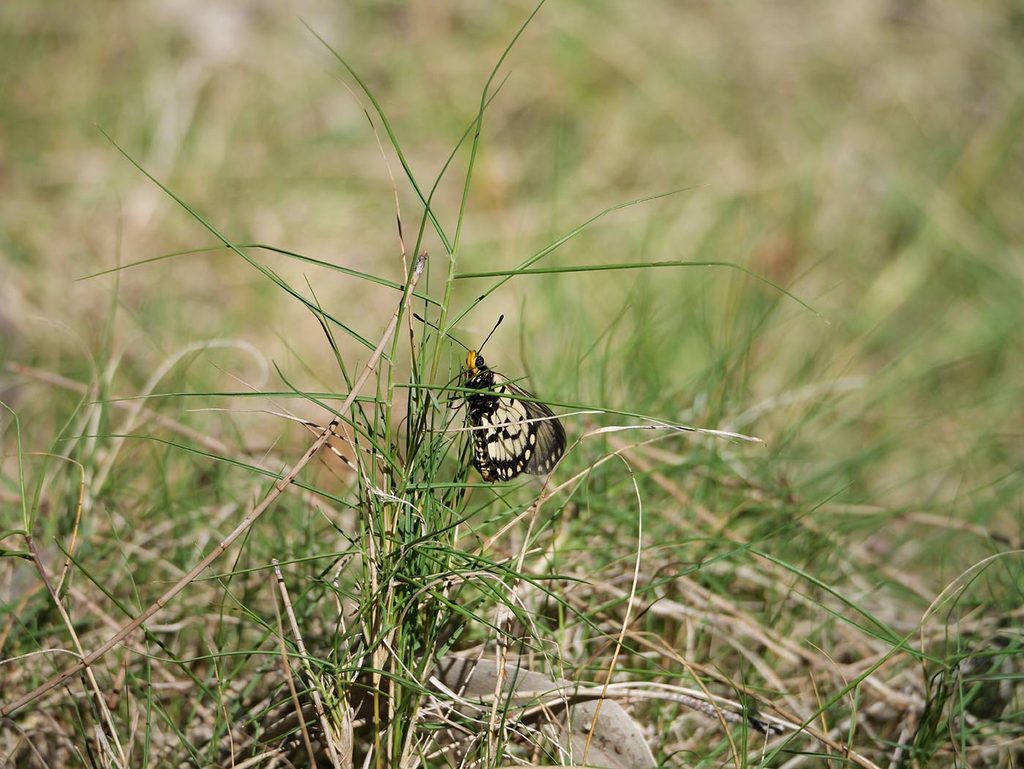
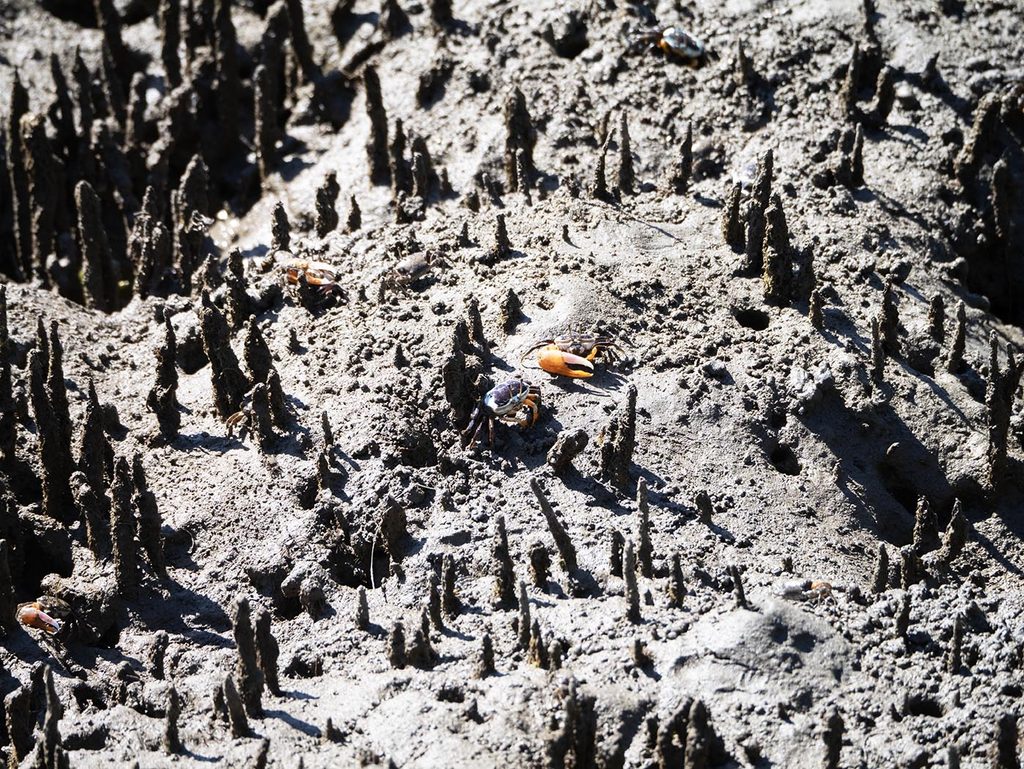
You can also spot various creatures on the ground. We saw a beautiful bearded dragon sitting on a tree stump, holding the perfect pose and almost blending completely into the colour of the stump. We also saw lovely butterflies, and near the mangrove trees you can spot countless crabs, including many fiddler crabs.
Info: Fiddler crabs are small crabs that you will frequently see near the mangrove trees of Boondall Wetlands. They are recognizable by their large orange claw on one side and a noticeably small claw on the other side. Males use the large claw to attract females and to ward off other males. At low tide you can see them scuttling across the mud in large numbers while foraging for food. They are a common sight to watch.
Why visit Boondall Wetlands
We think this is one of the most beautiful areas near Brisbane. What’s great about this area is that it’s not a very long drive, and you have a great chance of spotting some unusual creatures. The walking trails are well laid out and therefore accessible to everyone, and it’s never overly crowded, so you really get the feeling of being at one with nature. What’s more, a visit is completely free, and if you love photography, this is definitely worth a visit.
For more information about Boondall Wetlands, check out this website.