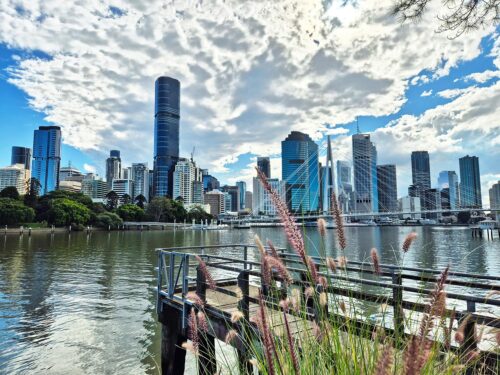
A tour of Australia is a dream for many, but how much does a three-week tour actually cost? Australia isn’t a cheap destination, but it’s definitely worth it if you enjoy nature, culture, and beautiful sights. Especially if you love breathtaking coastlines, a tour of Australia will get your heart racing. In this article, we provide an overview of the costs for a three-week tour, including flights from Amsterdam, accommodations, and excursions. (Prices are shown in Australian dollars).
1. Flights
The biggest expense for a trip to Australia is usually the airfare. A return ticket from Amsterdam to Sydney, Melbourne, or Brisbane for example costs an average of between $1,750 and $2,600 per person, depending on the season and the airline. During peak season (December–February), prices are often higher. By booking early and being flexible with dates, you can sometimes find cheaper deals.
Tip: If you want to fly to Australia as cheaply as possible, don’t be too fixated on a departure point, but play around with the city or the place where you start your trip. Flying to Cairns or Brisbane, for example, can sometimes be much cheaper than flying to Melbourne or Sydney. Also, check the prices for your return flight carefully. A return flight is always cheaper, but it can sometimes be difficult to end up in the same place in a large country like Australia. If you prefer to book a return flight because of the price, consider booking a domestic flight on the last day through Jetstar or Virgin to keep flight costs down.
2. Accommodation
During a tour of Australia, there are various accommodation options, ranging from simple hostels and budget hotels to luxury resorts and unique Airbnb options, such as beach houses or lodges nestled in nature. The final cost depends on the location, the season, and the desired level of comfort. For this calculation, we’ll use average hotels and motels as a starting point, with a price between $140 and $260 per night. In popular cities like Sydney and Melbourne, prices are often on the higher side, while you can find more affordable accommodation in smaller towns or outside of peak season.

For a 21-night trip, you can expect an average price of $200 per night.
Total accommodation costs: 21 nights x $200 = $4,200 per room
If traveling with two people, this amounts to approximately $2,100 per person.
Easily compare accommodation prices in Australia here
3. Transport within Australia
Australia is vast, and depending on the route, domestic transport can be a significant expense. However, you can keep costs down by making the right choices. Comparing transport options in Australia is therefore crucial.

There are three main options:
Domestic flights: For long distances, domestic flights are often the best option. A one-way flight between major cities costs an average of $175-$350. Jetstar and Virgin Australia are often the most affordable airlines.
Car rental: A rental car costs an average of $70-$120 per day, excluding fuel. For a two-week road trip, you should expect to pay $1,750-$2,600 in total. Tip: One of the best and most affordable car rental companies currently is DiscoverCars.com. On their platform, you can easily compare rental cars in Australia.
Another good car rental company that scores well among Dutch and Belgian travellers is SunnyCars. Read more about SunnyCars
Public transport: In cities like Sydney and Melbourne, public transport is relatively cheap (day passes around $17.50), but for long distances, a car or plane is often more efficient. We do recommend using public transport in the major cities, as it is very good and relatively inexpensive. And this way you save on car rental, parking costs and petrol.
Average transportation costs: $1,400 per person.
4. Food and Drink
Eating out in Australia isn’t necessarily more expensive than in Europe. With the wide range of restaurants and the wide selection of international cuisines, there’s always something for everyone. Especially in today’s world of high supermarket prices, the difference between cooking yourself and eating out is negligible. Many Australian pubs, for example, often have great deals during the week, allowing you to order a full meal for as little as $15, which is very affordable! Preparing a full meal for $15 isn’t easy these days.

Here are the costs for dinner:
- Budget: $25 per day (self-catering, food courts, and pub deals)
- Average: $60 per day (mix of eating out and self-catering)
- Luxury: $120+ per day (restaurants and eating out)
- On average, a traveler will spend around $60 per day.
Here are the costs for breakfast and lunch:
- Budget: $17.50 per day (self-catering, sandwiches, and drinks from the supermarket)
- Average: $60 per day (coffee, breakfast, and lunch eating out)
- Luxury: $120+ per day (restaurants and eating out)
- On average, a traveler will spend around $60 per day.
- Dinner costs: 21 days x $60 = $1,260 per person
- Breakfast and lunch costs: 21 days x $60 = $1,260 per person
- Total food and drink costs: $2,520 per person
Tip: One of our favourite apps of recent years is without a doubt The Pass. With The Pass, you can enjoy discounted food and drinks at more than 200 pubs and restaurants across Australia. The app offers exclusive deals for users, and you automatically earn points with every order, which you can later redeem for discounts on your next visit. Read more about The Pass in Australia
5. Tours and Activities
Australia is known for its beautiful scenery and adventurous activities, and you can take a tour in every city or area. From snorkelling and boat trips to stunning hikes. We assume you’ll take five tours during the three-week tour.

- Here are some popular tours and their estimated costs:
- Great Barrier Reef snorkelling or diving excursion: $260-$350
- Blue Mountains day tour from Sydney: $90-$220
- Uluru (Ayers Rock) tour: $260-$350
- Whitsundays boat tour: $210-$315
- Daintree Rainforest and Cape Tribulation tour: $175-$260
- When planning 5 tours, this comes to an average of $1,220 per person.
6. Other costs
- Travel insurance: $90-$175
- Visa (eVisitor for EU citizens): Free
- Souvenirs and extras: $175-$350
- Internet and SIM card: $50-$90
Total cost overview per person
| Cost (AUD) | |
|---|---|
| Flights | $2,175 |
| Accommodation | $2,100 |
| Transportation | $1,400 |
| Food & drinks | $2.520 |
| Tours & activiteiten | $1,220 |
| Overige kosten | $350 |
| Totaal | $9,765 |
FAQ about travelling in Australia
As we mentioned before, a tour of Australia isn’t cheap. But the cost of a tour depends heavily on your preferences and the level of luxury you choose for your trip. To keep costs down, we have a few tips that will easily help you save on your trip to Australia.
For your flight tickets, see if you can depart from a different airport. Sometimes there’s a significant difference between the prices of flights to Amsterdam, Brussels, or Düsseldorf for example. You might have to travel a bit further before your departure, but you can save up to $700 per person. That’s serious money, which you can use during your tour.
Also, save on accommodation, for example. Since you’ll be touring Australia, you’ll likely be spending a lot of time outdoors thanks to the pleasant climate and abundant nature. Why stay in a more luxurious hotel room if you’re only going to sleep there anyway? Consider budget accommodations that also score well to keep your accommodation costs down.
You can also save quite a bit on tours and activities. Do you absolutely have to take that one tour? Or can you perhaps visit the sights described in the tour on your own with your own car? Even saving on one tour is a bonus, as tours and activities aren’t cheap these days, especially when traveling with your whole family.
You can also save a lot on food and drinks. For example, buy breakfast and lunch for the entire week from the supermarket and eat out less. Or look for pub deals for dinner, where you can often find great prices in Australia. Or find an affordable food court where you can dine affordably. Of course, preparing your own food can also save you money on food and drinks.
The best time to visit Australia depends on the region and activities. For South Australia (Sydney, Melbourne, Perth), spring (September-November) and autumn (March-May) are ideal. Northern Australia (Cairns, Darwin) is best visited during the dry season (May-October), while the Outback is pleasant in winter (May-September). Summer (December-February) is perfect for beaches and surfing, while the Great Barrier Reef has its best visibility from June-October. Whale watching is possible from May-November. For an east coast road trip, September-November or April-June are ideal to avoid the heat and crowds. As you can see, the weather varies considerably, and your preferences are important.
Book your trip to Australia 3-6 months in advance for the best deals. The cheapest travel times are May-June and September-early December, while December-January is the most expensive. Flights are often cheaper on Tuesdays and Wednesdays. Accommodation is cheaper in February-June and September-November, outside of school holidays. Domestic flights with Jetstar or Virgin are cheaper when booked early. But even here, there can be differences. So search and compare carefully and experiment with the dates and destinations.
Disclaimer: This article is based on prices we saw on March 10, 2025, and assumes a 3-week tour. Prices may have changed since then.